What Actually Happens on Day One at Maynords
There is a specific kind of dread that shows up the night before someone leaves for treatment. It is not really about the treatment itself, not yet. It is about the not-knowing. What does the building look like. Who will be there. What happens the second you walk through the door. Will it feel like a hospital, cold and clinical, or something else entirely. Families feel a version of this too, usually while packing a suitcase for someone who keeps changing their mind about whether they are actually going.
We cannot promise that the fear disappears. But we can walk you through what admission day at Maynords actually looks like, because most of what makes that first day frightening is the unknown, and the unknown is something we can fix.
Before you arrive
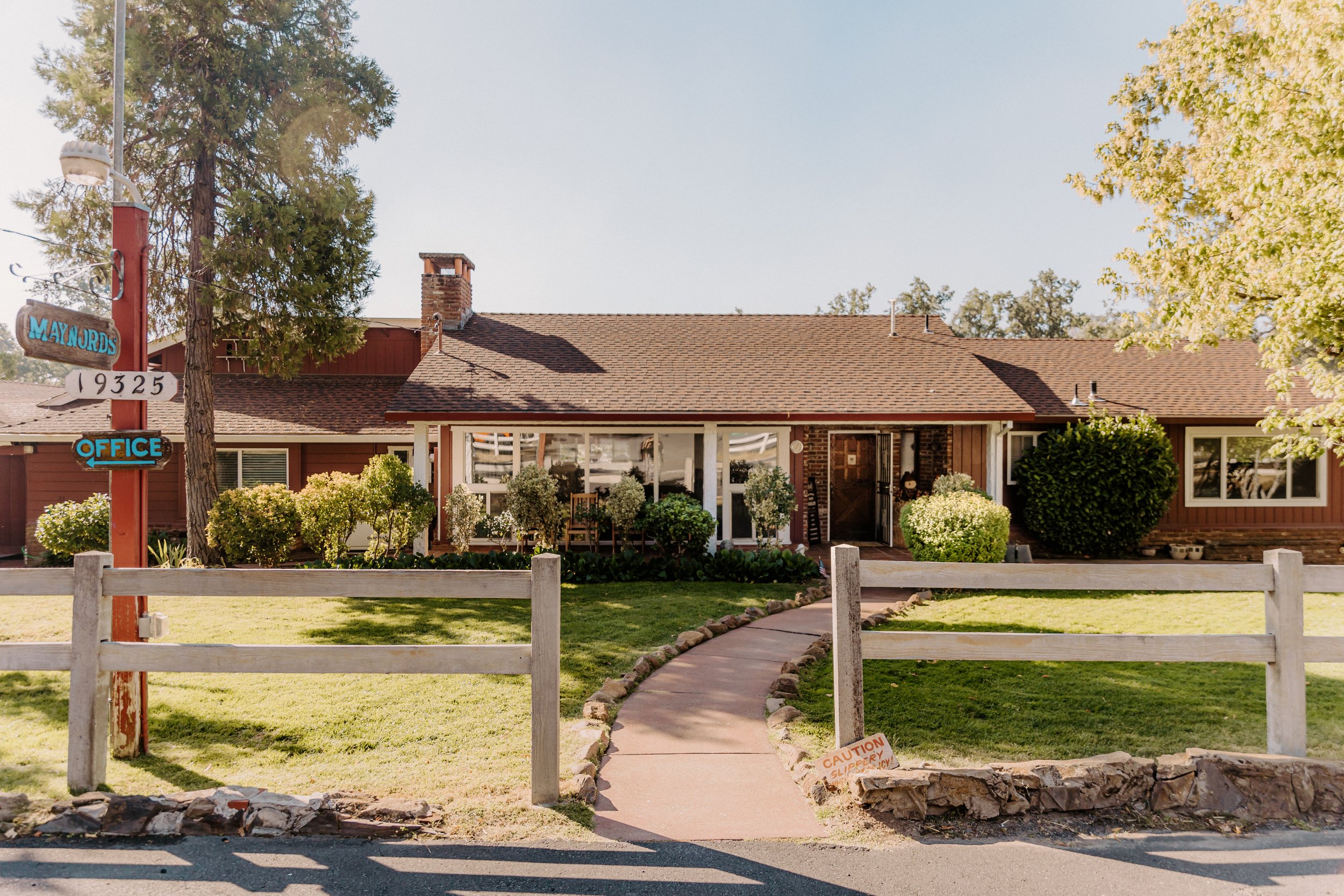
Maynords sits on 22 acres in the Sierra Nevada foothills near Tuolumne, on Cherokee Road, where Joan and Bob Maynord started this place in 1978. It is quiet out here. There is a pond, a barn that has stood on the property for over a hundred years, and a handful of animals Joan always believed belonged as part of the program. It does not look like a hospital because it is not one. It is a 30-bed facility, family-owned for 48 years, and that scale matters. You are not a number moving through a large institutional system. The people who answer the phone, walk you through insurance, and greet you at intake are often the same people who will know your name by the end of the week.
Before admission day, our team works with you on insurance verification so that piece is handled ahead of time, not sprung on you at the door. Maynords accepts a wide range of insurance plans and Employee Assistance Programs, and we offer a reduced rate for clients paying out of pocket. If you are unsure what your coverage looks like, that is a conversation we can have before you ever pack a bag.
What to bring
Packing can feel oddly overwhelming when someone is already scared or resistant about going in the first place. Here is what actually needs to be in the suitcase, no more than two, each no larger than 29 by 20 by 10 inches:
- Five to six sets of casual, non-revealing clothing, plus comfortable walking shoes
- Seasonal outerwear for the weather here in the foothills
- Grooming supplies without aerosols or alcohol content
- Laundry detergent and quarters for the machines
- Sleepwear
- Insurance cards and a valid ID
- Medications, sealed in their original containers, approved in advance by the facility director, roughly a 30-day supply
A few things need to stay home: weapons, electronics, cell phones, computers, fragrances or mouthwash containing alcohol, outside bedding, and outside food or drink. If the person entering treatment smokes cigarettes, those are allowed, though the facility does not sell tobacco on-site, so it needs to be brought in.
None of this is about control for its own sake. It is about building an environment where someone can actually focus on getting well, without the outside world and its usual triggers sitting in the room with them.
Walking through the door
Intake is not a formality you rush through so the "real" treatment can begin. It is the beginning. A staff member goes through your belongings with you, confirms your paperwork, and starts getting to know you, not just your diagnosis. For most people, the first clinical step is sub-acute detox, which is the process of clearing the body of the toxins that have built up from substance use. It is often the hardest physical stretch of the whole stay, and it is honestly just the first step, not the finish line. We will talk more about why detox alone is not the same as treatment in another post, but on day one, what matters is that our medical and counseling staff are watching closely, adjusting as needed, and making sure that physical process is handled safely.

Once someone is medically stable, the days start to take shape. There is a classroom learning center, group sessions, individual counseling, meals in our dining room, and a rhythm to the day that a lot of people say they did not realize they needed until they had it. For clients whose families are local or able to travel, there is a separate building on the property where counselors meet with families, away from the main living areas, so those conversations have their own space.
For the family standing at the door, too
If you are the one dropping someone off, day one is its own kind of hard. You have probably imagined this moment for a long time, maybe with relief, maybe with guilt, maybe wondering if you are doing the right thing by leaving them here. That feeling does not mean you are wrong to leave. It means you love someone and this is unfamiliar. Our staff is used to that moment. You are allowed to cry in the parking lot. You are allowed to call the next day and ask how they are doing.

Day one is not about someone deciding, all at once, that they are ready and fixed. It is about a person walking into a place that is quiet, staffed by people who have done this a long time, and structured enough to hold what they cannot hold on their own right now. That is the whole purpose of the first day. Not certainty. Just a start.
This post is meant to help you know what to expect, not to replace an actual conversation about your situation or your loved one's. If any part of this sounds like your family, you can call Maynords at +1 209-928-3737 or email recovery@maynords.com — no pressure, just a conversation.